Walk into a peaceful barn on a weekday mid-day and you will certainly notice a loads small details your nervous system tracks without effort. The crisis of gravel, a hay-rich smell that is sweet but not sugary, a barn follower humming reduced, a curious gelding nosing the zipper on your coat. For a kid or grown-up with sensory processing challenges, that very same moment can be overwhelming, or it can be a meticulously structured play area for finding out self-regulation. The distinction hinges on preparation, pacing, and partnership with the horses.
I have invested years viewing people find steadier footing around horses. I have also seen plans fail when the barn is too busy, the steed is ill-matched, or the routine is rushed. The Sensory Steady is not a miracle; it is a thoughtful, living framework that unites healing horsemanship, occupational treatment concepts, and equine-assisted solutions to construct abilities that transfer home and right into the classroom or work environment. When it functions, it looks simple. That simpleness is earned.
What we mean by sensory processing challenges
Sensory handling difficulties appear in a hundred little means. A youngster might seek motion regularly, spinning in the cooking area between bites of cereal. Another could become stiff or in tears in a loud cafeteria. A grownup may do fine at the workplace, after that crash at home with frustrations that trace back to fluorescent lights and a chair that never ever fairly fits. Some have a professional diagnosis such as autism range problem, ADHD, or sensory handling condition. Others define a long-lasting pattern of being "too delicate" or "always on."
The nervous system maintains us risk-free by filtering system, sorting, and focusing on input throughout senses. For some individuals, the filters sit vast open or snap shut without warning. The objective of an alternative treatment for sensory challenges is not to alter a person's wiring, it is to aid them construct a device kit that reduces overload, raises agency, and supports involvement in the life they want. Equines provide an uncommon mix of motion, feedback, and honest relationship that can make this work stick.
Why horses help
Three components often tend to unlock progress.
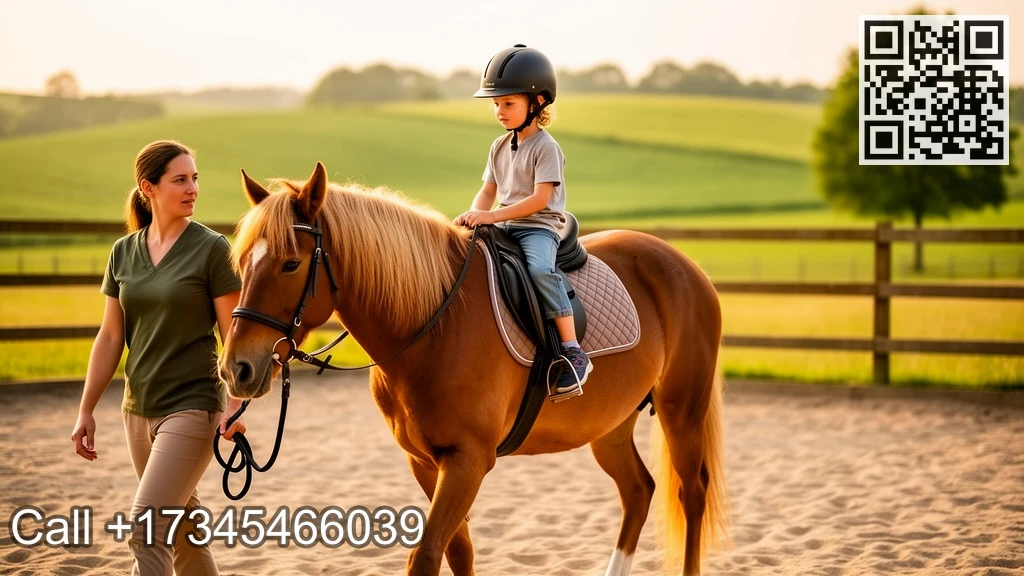
First, rhythmic movement. An equine's walk creates multi-directional movement, roughly 90 to 110 actions per min, which engages the cyclist's vestibular and proprioceptive systems. The hips moves in a pattern similar to human strolling, which is one reason occupational therapists and physiotherapists occasionally work together in equine-assisted tasks. You can dial strength up or down by adjusting stride, surface area, and setting, from sitting upright to existing throughout the equine's neck.
Second, relational co-regulation. Equines are target animals, exquisitely in harmony with body movement, breathing, and tension. They respond in real time to our interior state. I have viewed a fidgety teenager soften their shoulders, after that enjoy the equine's head drop a fraction in feedback. That loophole of cause and effect can be much more instant than a counselor's words and, with repeating, it anchors brand-new habits. This is where equine-facilitated wellness and equine-assisted coaching overlap with mental wellness support, especially for anxiety.
Third, sensory range with built-in significance. A barn setting provides tactile, olfactory, visual, and auditory inputs that are not produced. Brushing an equine is not an exercise sheet, it is a job the horse enjoys. Brushing up an aisle is not busywork, it is preparation for risk-free movement. Genuine jobs involve focus in a different way than drills, which issues for ADHD equine learning support.
The Sensory Steady in practice
When I talk about a Sensory Stable, I mean greater than a silent barn. I imply a program that makes use of equine-assisted services with clear goals, an experienced group, and a prejudice for measuring what issues. The group generally consists of a credentialed teacher in healing horsemanship, an equine expert that knows the equines' stress signals intimately, and often an occupational therapist or mental health and wellness expert, depending on the individual's needs.
Sessions run in between 45 and 75 minutes. The very first 10 minutes usually establish the tone. We could walk the fencing line with each other, hands in pockets, calling audios. Or we might hug the horse's shoulder and suit breathing without touching. On difficult days, the entire session may happen outside the field, under a tree where the equine can graze and the individual can clear up. There is no reward for entering into the saddle. Actually, several of the best progress I have actually seen happened during foundation and silent grooming.
A day with Ella
Ella was 9 when she arrived, identified with autism and a history of bolting from transitions. She liked pets but had a low resistance for unforeseen noise and busy visual areas. We coupled her with Precursor, an Arm gelding that stood simply under 14 hands with the focus period of a monk. The grooming set was streamlined to three tools, each in its own zippered pouch. Ella was told she can claim "pause" at any moment by touching her wrist.
We never ever when needed to motivate her to use "pause." She utilized it six times in the initial session. By session 4, she picked to place for three mins at the stroll while holding a strap. We established a timer behind her, unseen yet within earshot, and agreed to stop at the initial bell no matter what. Predictability aided her threat a new feeling without supporting for a shock. By month three, her college reported less elopements from the lunchroom. She was sitting at the end of the table where foot traffic was lighter, and she held a tiny grooming brush in her pocket that scented like Precursor. Lugging that odor with her ended up being a peaceful bridge to safety.
A morning with Malik
Malik, 15, had ADHD and a trail of apprehensions for "interfering with class." He was brilliant, funny, and injury tight as a springtime. He chatted so quickly that the steed he satisfied blinked 3 times, changed away, and yawned. We watched with each other and I asked what he thought the blink and yawn meant. He said, "He is burnt out." I showed him where the muscles at the horse's flank flickered without flies close by. "He is stressed out," Malik claimed, a little surprised. We established a difficulty: obtain three deep breaths from the equine prior to strolling off.
He tried jokes, clucks, whistles. None worked. After that he stood still, counted his own breathe out to five, and the horse burnt out a long, soft breath from his nostrils. Malik brightened. That small success became a game about vibration. We took it back to school by constructing a before-class routine: two lengthy exhales paired with a glance at an image of the horse. His science educator emailed later on that month: "Whatever you are doing, send out more." Was this equine-facilitated training? In spirit, yes, though we never ever touched a company goal. It was coaching a method of being.
What a session can look like
No two sessions coincide, yet a steady arc aids. For many people, a predictable rhythm holds their nerve system, then the horse can do its silent work inside that container.
Here is a straightforward flow that adjusts well to different ages and profiles:
- Arrive and orient: two minutes to notice 3 sounds, 2 scents, one structure. No pressure to talk. Greeting routine: wait on the steed to orient to you, after that supply a hand at midline, fingers together, palm down. Count three shared breaths. Ground task: grooming, leading through a simple pattern, or establishing cones. Keep selections limited to lower decision fatigue. Movement: installed or unmounted, brief and deliberate. For installed time, assume three to 5 minutes at the stroll in other words sets, not a marathon. Cooldown and bridge: name one ability that functioned, record it in an aesthetic or phrase to carry home, and thank the horse with a scratch at a preferred spot.
That series looks brief theoretically, yet it loads an hour once you rate it to an actual person with an actual equine. You can increase or press each element. For a person with high sensory defensiveness, arrival and welcoming might be 80 percent of the help weeks. For a sensory candidate, the motion block may lug even more weight, but it still lives inside a prepared workout and cooldown to shield from a collision later.
From treatment to finding out to coaching
Families typically ask what the distinction is between therapeutic horsemanship, equine-assisted activities, and equine-assisted coaching. The lines are fuzzy because individuals's demands overlap. If the key goals are scientific, such as boosting postural control, resistance to touch, or exec working in everyday jobs, we are directly in the world of therapeutic horsemanship and allied equine-assisted services. If the focus approaches leadership, communication, and group dynamics, we are discussing experiential learning with equines and equine-facilitated mentoring. The methods share a core: clear objectives, a steed's truthful feedback, and structured reflection. The Sensory Steady model borrows from all three, after that customizes the mix to the person before us.
For offices and institutions, team structure with steeds can function as a capstone once specific regulation skills enhance. I have actually run half-day workshops where trainees that when infatuated by themselves bewilder done well in negotiating a team task with a horse, such as relocating through a puzzle of posts without talking. That sort of success lands in different ways than a trust fund autumn in a fitness center. The equine votes with its feet. Teams have to steady https://rylancthj935.timeforchangecounselling.com/conscious-mornings-at-the-barn-equine-facilitated-wellness-practices themselves, check out nonverbal signs, and readjust in genuine time. That is not a gimmick, it is a living mirror.
Somatic healing with horses
Somatic does not suggest mystical. It indicates related to the body. Somatic healing with equines concentrates on sensation, pose, breath, and movement patterns as resources of information. For anxiety, this can be a game-changer. An anxious individual usually lives inches ahead of their body, anticipating problems. Standing close to an equine that reacts to tiny shifts brings interest back to weight in the feet, softness in the knees, and the pace of breath. We match that awareness with straightforward choices: go back, step more detailed, touch the neck or the shoulder, look left or right. Gradually, the body discovers a series it can duplicate without the equine. The equine is both educator and training partner.
One of my adult clients, a 32-year-old visuals developer, started sessions for anxiety support with equines after anxiety attack drove her to work from home. She never mounted. Rather, she led a mare via patterns, concentrating on breath at each turnabout. By month two, she could explain the earliest hint of panic, typically a rigidity under her ribs, and respond with a pattern she had actually practiced in the sector. Her specialist told her, "You developed a somatic map." That map began with a hoofprint.
Designing for sensory profiles
It is alluring to chase a single procedure. Actual individuals require choices. Below are patterns I consider when planning.
Sensory defensiveness, the person who surprises or withdraws, typically requires less variables. We avoid peak hours. We select equines with sluggish blinks, pendulum tails, and a reduced ear carriage. We maintain brushing devices predictable. Weighted brushing pads can include proprioceptive input without surprise. Placed work begins with a lead walker and side watchman also if equilibrium is strong, simply to lower social demand.
Sensory seeking, the individual that craves motion and deep stress, benefits from framework that networks power. We could make use of a bareback pad for textured input, construct brief running embed in a fenced round pen, and adhere to each established with a standing job that needs serenity, like balancing a beanbag on the steed's neck while the equine stands. Way too much disorganized excitement, such as a jampacked show day, can activate disorder rather than satisfy the craving.
Mixed profiles prevail. A child might seek spinning but avoid certain noises. That is where a sound-dampening headband and peaceful pockets of the home matter. We identify retreat routes beforehand, not as penalty but as a dignity-saving plan.
Horses as partners, not tools
Welfare is not a slogan. Steeds that carry the weight of human knowing deserve proof that we are watching out for them. In technique, that implies clear work-rest ratios, normal yield with herd friends, and training that rewards curiosity. I retire equines from mounted job when their joints inform us it is time, often maintaining them as ground partners. I likewise listen when a horse declines a session. A pinned ear throughout tacking, a limited mouth while suppressing, or an equine who stands with his hindquarters angled away at greeting time are information. We reschedule or change the task. The most effective programs I know placed as much idea into the steeds' sensory globe as the human beings'.
Evidence, results, and truthful limits
Families should have honesty regarding what we understand. Study on equine-assisted solutions is growing yet still irregular. Research studies on autism equine learning programs reveal patterns towards gains in social interaction and self-regulation. Work with ADHD recommends improvements in interest and working memory, commonly determined by parent or instructor report as opposed to lab tests. Anxiety results often depend on self-report scales, which matter, but we should pair them with behavior pens such as institution attendance or sleep quality.
I ask each family members to name 2 practical objectives we can observe. "Decrease crises" becomes "leave the room with a plan during snack bar overload 4 days a week." "Better concentrate" ends up being "remain in seat with early morning meeting three days a week." We examine every 6 weeks. If we are stagnating, we change, or we state this is not the best fit today. Equine-facilitated health should never be a dead end where hope idles without a map.
Safety without fear
Barns hold honorable dangers. Dust, hooves, and weather will certainly not obey us. We decrease risk with layered security that does not scare people away.
Helmets are nonnegotiable when placed. Boots with a heel aid. Allergy plans issue, including rescue inhalers and EpiPens when relevant. We instruct distance skills long before requesting for rate: where to stand, exactly how to transform, when to step back. Staff look for warm stress in summertime and sensory tiredness all year. The rule of thumb I teach new volunteers is easy: slow-moving is smooth, smooth is safe, and safe makes room for learning.
How to choose a program
If you are looking for assistance, you will certainly discover a range of offerings. Some barns run equine-assisted tasks with a leisure emphasis. Others offer equine-facilitated mentoring for grownups and teens around management and stress. A couple of have multidisciplinary groups that resemble clinics. Tags differ; in shape issues a lot more. Here is a short list of what to search for:
- A clear consumption process that asks about sensory history, objectives, and medical demands, not simply riding experience. Horses matched deliberately to individuals, with a plan to turn or rest them. Staff qualifications that match your goals, such as a healing horsemanship certification, and partnership with OTs or mental health and wellness experts when indicated. A plan for gauging results that makes good sense to you, with check-ins and adjustments as opposed to a dealt with package. A barn culture that really feels calmness, clean, and kind to steeds and people alike.
Trust your eyes and your intestine. View an additional session silently. Ask how the team handles a hard day. If you hear, "We just press with," keep looking.
Starting gently at home
You do not need a farm to start supporting sensory regulation with horse-informed routines. Obtain the spirit.
Create a brief arrival routine for changes, like after school or job. Call three audios, 2 smells, one structure. Slow your exhale. If a member of the family joins an equine program, request a hint or phrase you can make use of in the house to bridge abilities. One teen attracted the overview of her steed's ear on a sticky note at her desk. Touching that drawing before a test advised her to drop her shoulders and breathe.
For anxious nights, some families place a little sachet of clean hay near the bed. Scent is a quick path to memory and safety for lots of people. Others make use of a horse's slow-moving chew as a psychological metronome, counting a silent "one and 2 and 3" for 30 seconds to establish a calmer pace before sleep.
Program nuts and bolts
The behind-the-scenes information make or damage sustainability. Equines require constant timetables and financial backing for treatment. Families require quality on costs, cancellations, and scholarships. Personnel need time to debrief and rest. My guideline is to leave 15 minutes between sessions, also if it implies fewer reservations in a day. That buffer absorbs the human and steed variables that constantly emerge, and it maintains me from hurrying the goodbye, which is commonly the most important minute of the hour.
Gear selections issue. Soft lead ropes decrease hand fatigue. Curry combs with two structures enable fast modifications for sensory preference. Installing blocks with hand rails sustain balance without including individuals to the room. Visual schedules printed on laminated cards minimize language lots and keep us straightforward regarding pacing.
Seasonal adjustments require preparation. In winter season, the barn hum declines and the air really feels sharper, which some people find relaxing and others discover punishing. We shorten sessions or relocate more of the job to enclosed spaces when wind noise climbs up. In summer season, hydration strategies become explicit, with cold towels on hand and mounted time set up in short sets or earlier in the early morning. Equines have their very own seasonal rhythms, as well. A steed who glides via springtime might become cranky throughout fly period. We add fly masks or change pairings accordingly.
When it is not the right fit
Sometimes the barn is the wrong place in the meantime. If a person's fear of pets is high, direct exposure can backfire unless a psychological health professional gets on the group and the plan is mild. If uncontrolled seizures, brittle bones, or severe allergies elevate the threat beyond factor, we state so clearly and discover surrounding supports. I have referred families to dog-based programs, climbing up gyms, and swimming pool therapy when those settings better matched an individual's account. The objective is not to funnel people into steed work, it is to aid them thrive.
Cost, accessibility, and creative partnerships
Equine programs are not low-cost to run. Herd care, team training, insurance coverage, and property prices add up. Fees in numerous regions range widely, typically in between 60 and 150 dollars per session. Scholarships and gives assist, but they hardly ever cover all demands. Collaborations with schools, healthcare systems, and companies can stabilize gain access to. I have seen institution areas fund an autism equine learning program as component of prolonged school year services after tracking gains present and self-regulation. Some companies support equine-facilitated mentoring for groups under stress and anxiety, then offer family days for employees with children that might benefit from gentle contact with horses. Imaginative remedies keep the doors available to even more people.
Building a bridge back to everyday life
The best indication of success is not exactly how someone acts at the barn; it is what modifications outside it. We plan for transfer from the start. A parent might learn a "barn breath" pattern and practice it with a youngster prior to riding in the cars and truck. An instructor could establish a trainee's seat near a home window and let them bring a smooth stone from the arena to scrub silently throughout transitions. A teenager might exercise the very same two-step hint that brought a steed to a halt as a means to pause before speaking in class.
Each program selects two or 3 bridge activities, techniques them in session, and sends them home on a tiny card. Basic, mobile, and linked to a sensory experience with a steed, those bridges make the learning sticky.
A final word for the horse-curious
If the concept of equine-assisted solutions moves you, do not wait on a perfect minute. Visit a center. Smell the hay. View just how individuals and equines relocate together. Ask sensible inquiries. Search for programs that treat horses as partners and people as entire beings, not as diagnoses or "situations." The Sensory Secure is not regarding riding in circles. It has to do with developing a nerve system that can meet the world with a steadier breath and a kinder rhythm, supported by a creature that urges we turn up as we are.
With treatment, humility, and an excellent group, steeds can become effective allies in alternate treatment for sensory obstacles. They use comments without judgment, motion with significance, and an existence that makes area for modification. That is an uncommon combination. It is likewise deeply human.